
Missouri Merchandising Practices Act (MMPA)
Estate sales are often conducted after the death of a loved one, during a divorce, or when someone is downsizing. Consumers place significant trust in estate sale companies, expecting them to inventory valuable belongings, sell them for fair market value, maintain accurate records, and promptly remit the proceeds.
Unfortunately, complaints involving estate sale fraud and mismanagement are not uncommon. Allegations may involve missing property, inaccurate accountings, undisclosed sales, failure to remit proceeds, or disposal of valuable items without the owner’s knowledge.
Our firm represented a Missouri consumer who alleged that she became the victim of this type of misconduct. The case was tried before a St. Louis City jury, which returned a verdict in favor of our client.
Background of the Estate Sale Dispute
According to the lawsuit, our client hired an estate sale company to liquidate the contents of her home while she was going through a divorce. The company allegedly represented that the sale would generate approximately $60,000 in proceeds and agreed to provide complete sales records and payment after the sale.
Instead, our client alleged that only minimal proceeds were ever paid, despite repeated assurances that additional sales would occur. She further alleged that requests for an inventory and accounting were refused and that many of her belongings were ultimately discarded without her permission.
The lawsuit asserted claims for breach of contract, conversion, fraud, negligent misrepresentation, and violation of the Missouri Merchandising Practices Act. The allegations included that the defendants misrepresented how the estate sale would be conducted, failed to provide promised sales records, failed to remit proceeds, and concealed the disposition of the client’s property.
Jury Verdict Under the Missouri Merchandising Practices Act
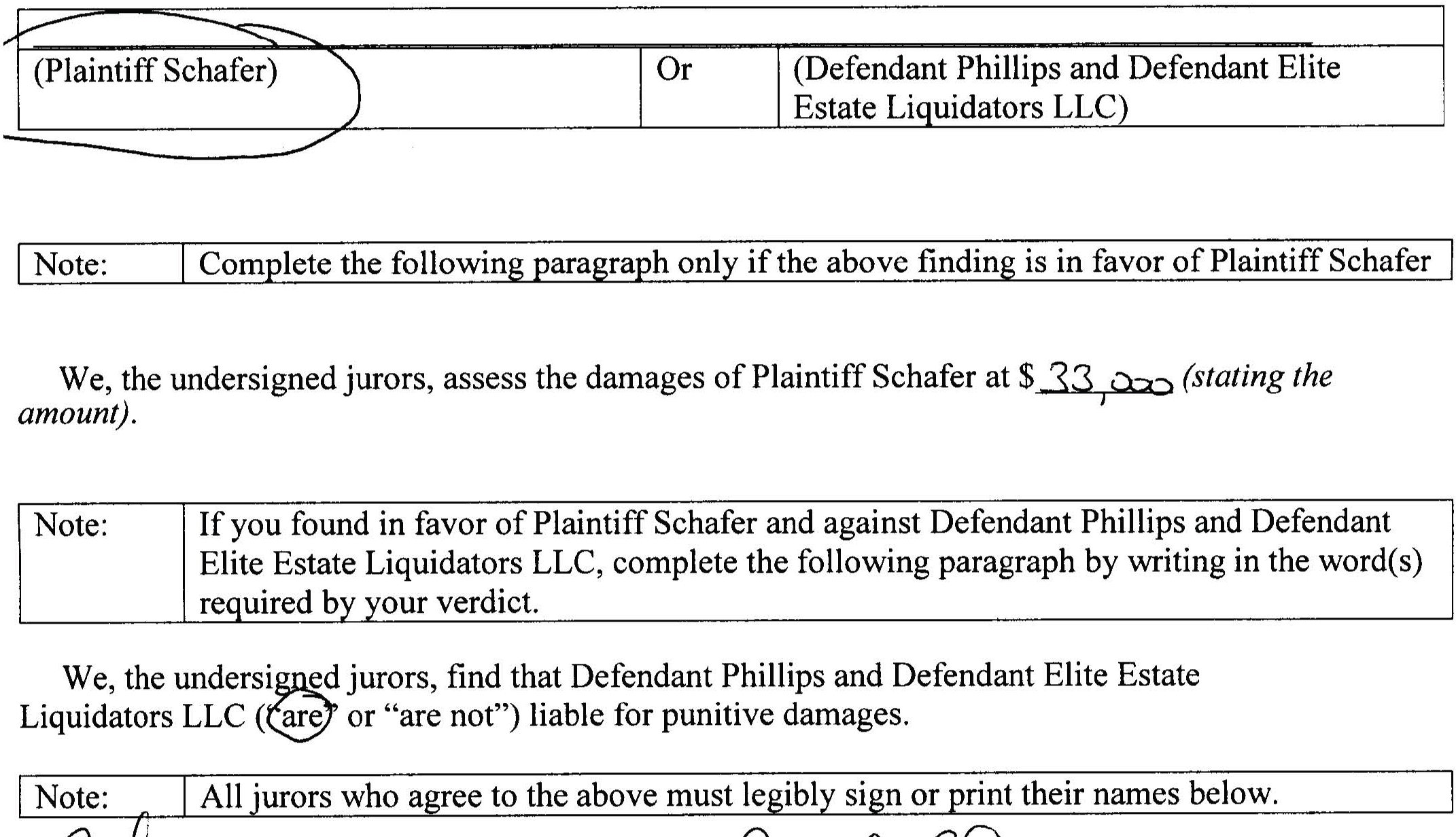
After a jury trial in the Circuit Court of the City of St. Louis, the jury found in favor of our client on her Missouri Merchandising Practices Act claim.
The jury awarded: $33,000 in actual damages and $45,000 in punitive damage.
Because the case was submitted under the MMPA, Missouri also allowed for an award of attorneys’ fees to be paid by the defense.
Common Warning Signs of Estate Sale Fraud
Most estate sale companies operate honestly and professionally. However, an estate sale arrangement can create an opportunity for abuse because the owner often gives a company possession and control of an entire household of personal property.
Potential warning signs of estate sale fraud or misconduct may include:
- Failure to provide a written inventory of the property received
- Failure to provide complete sales records or an accounting
- Unexplained delays in paying sale proceeds
- Claims that valuable property had little or no value despite earlier representations
- Missing items that cannot be accounted for
- Property being discarded, donated, or removed without authorization
- Refusal to explain where, when, or for how much items were sold
- Repeated promises that additional sales or payments will occur without supporting documentation
How Estate Sale Fraud Can Occur
Estate sale disputes may arise when a liquidator fails to maintain accurate records, combines property from multiple clients, conducts private or undisclosed sales, undervalues items, retains proceeds, or disposes of property without permission.
These problems can be especially difficult to uncover when the owner is dealing with a death, divorce, move, or other stressful life event and is unable to personally supervise the sale.
For that reason, consumers should consider requiring a written agreement that addresses inventory procedures, commissions, expenses, payment deadlines, unsold property, and the records that will be provided after the sale.
Protecting Consumers Under the MMPA
The Missouri Merchandising Practices Act protects consumers from deceptive and unfair business practices involving goods and services. Depending on the circumstances, conduct involving false promises, misrepresentations, concealment, or unfair practices may support a claim under the MMPA.
Available remedies may include actual damages, attorney’s fees, and, in appropriate cases, punitive damages.
Although every case depends on its own facts, this verdict demonstrates that businesses entrusted with a consumer’s property can be held accountable when they fail to honor that trust.
Past results do not guarantee a similar outcome in any future case. Every case is different and must be evaluated on its own facts.