
st. louis Business Fraud Lawyer
Aggressive St. Louis Business Fraud Lawyer Recovering What You Are Owed
Business fraud takes many forms, but the bottom line is always the same. You trusted someone, you relied on what they told you, and they used that trust to take what was not theirs. Maybe a business partner cooked the books and pocketed your share. Maybe a vendor shipped counterfeit goods or invoiced for work that was never performed. Maybe a financial advisor steered you into investments designed to enrich them rather than you. Maybe a buyer of your company concealed liabilities that turned the deal into a nightmare. Whatever the form, fraud causes real financial harm and Missouri law gives you the right to pursue accountability.
If you suspect you have been defrauded by a business partner, vendor, advisor, or other party, you do not have to absorb the loss. Call Kevin Etzkorn Law at (314) 987-0009 today for a free, confidential consultation, or contact our St. Louis office online. Kevin Etzkorn has more than two decades of trial experience handling complex civil litigation, and there is no fee to investigate your case unless we recover for you.
What Is Civil Business Fraud Under Missouri Law?
Civil fraud is a claim for damages caused by intentional deception. Missouri courts recognize a number of fraud and fraud adjacent causes of action, each with its own elements, but the most common is fraudulent misrepresentation. To prove fraudulent misrepresentation in Missouri, a plaintiff generally must show:
- A representation by the defendant
- That the representation was false
- That the defendant knew the representation was false or was reckless about its truth
- That the defendant intended for the plaintiff to rely on the representation
- That the plaintiff did rely on the representation
- That the reliance was reasonable
- That the plaintiff suffered damages as a result
Other related claims include negligent misrepresentation, fraudulent concealment, fraudulent inducement, breach of fiduciary duty, civil conspiracy, conversion, and unjust enrichment. The right combination depends on the facts of your case.
How Civil Fraud Differs From Criminal Fraud
Criminal fraud cases are prosecuted by federal or state prosecutors and require proof beyond a reasonable doubt. The penalties are fines and imprisonment, and the victim does not directly control the case. Civil fraud cases are brought by the victim and require proof by clear and convincing evidence in many circumstances. The remedy is monetary compensation, including actual damages and, in many cases, punitive damages. The two can run in parallel, and we coordinate where appropriate.
Common Types of Business Fraud Cases We Handle
The fraud claims we see most often in St. Louis include:
- Partnership and shareholder disputes involving misappropriation of profits, hidden distributions, or self dealing
- Investor fraud and securities fraud involving misrepresentation of financial condition or use of funds
- Mergers and acquisitions fraud including concealment of liabilities, contingent claims, or financial condition
- Vendor and supply chain fraud involving counterfeit goods, false invoicing, or kickbacks
- Construction fraud including overbilling, change order abuse, and substandard work concealed by deceptive documentation
- Real estate fraud involving misrepresentation of property condition, title, or value
- Insurance fraud by carriers acting in bad faith or by claimants making fraudulent claims
- Employment based fraud including misappropriation of trade secrets and false expense reimbursements
- Consumer fraud including deceptive advertising and bait and switch sales tactics
The Missouri Attorney General’s office maintains consumer protection resources and prosecutes some of these matters criminally, but private civil action is often the only way for individual victims to recover their losses. The federal Securities and Exchange Commission also pursues investment fraud, again separate from any individual victim’s right to civil recovery.
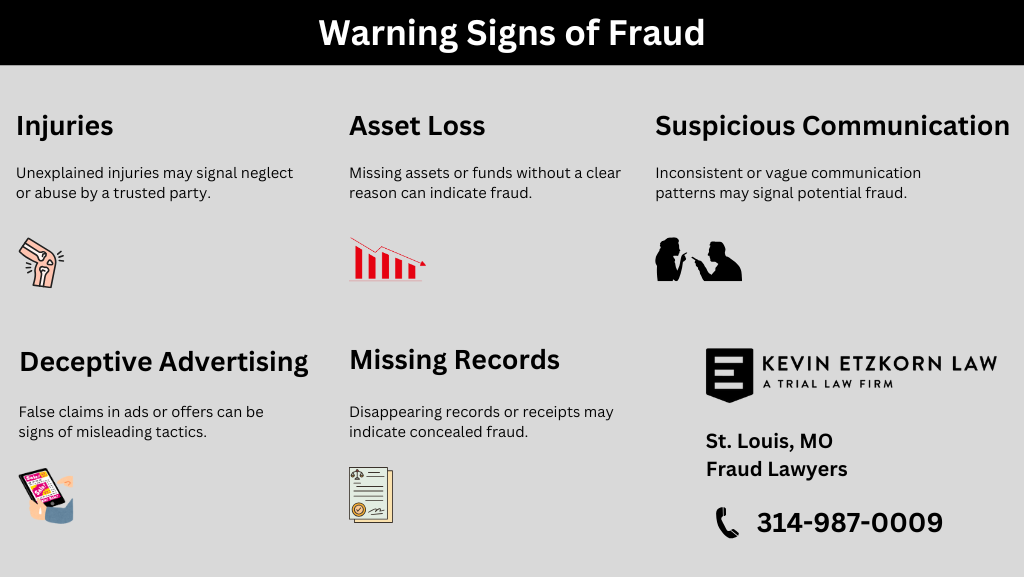
How Business Fraud Cases Get Built
Fraud cases turn on documents, emails, financial records, and inconsistent stories. The defendant rarely admits fraud outright. Our job is to put together a paper trail that makes the truth obvious to a jury.
Financial and Document Discovery
We start by gathering everything available: contracts, emails, text messages, invoices, bank records, tax returns, accounting files, board minutes, capital call notices, and any other documentation that touches the transaction in question. Once suit is filed, we use formal discovery to compel production of additional records that the defendant would never voluntarily share.
Forensic Accounting
In many cases we work with forensic accountants who can trace funds, identify undisclosed transfers, and reconstruct financial history. Forensic accountants often find what no one else can.
Depositions and Inconsistent Statements
A defendant who has lied once often has to lie again to maintain the original story. Depositions are where those inconsistencies get exposed under oath, and inconsistencies are powerful evidence at trial.
Expert Testimony
Business valuation experts, industry experts, accounting experts, and damages experts all play a role in proving both liability and the amount of harm. To learn more about how the firm approaches complex civil litigation, visit our main personal injury page, which describes our broader trial focused approach.
Damages Available in a Missouri Civil Fraud Case
Missouri law allows fraud plaintiffs to recover several categories of damages.
Actual or Compensatory Damages
These are the out of pocket and consequential losses caused by the fraud. They include the difference between what the plaintiff was promised and what they received, lost profits when foreseeable, related expenses, and other economic harm flowing from the wrongdoing.
Punitive Damages
Missouri allows punitive damages where the defendant’s conduct was outrageous because of evil motive or reckless indifference to the rights of others. Fraud, by its nature, is intentional misconduct, which makes it one of the categories of cases where punitive damages are most often awarded. Punitive damages are designed to punish the wrongdoer and deter similar conduct, and can be substantial in egregious cases.
Equitable Remedies
In addition to money damages, Missouri courts can grant equitable remedies including rescission of contracts, constructive trusts on misappropriated assets, accountings, and injunctive relief. Choosing the right combination of legal and equitable remedies is part of the strategy in every case.
Attorney’s Fees
Although Missouri generally follows the American Rule on attorney’s fees, certain statutes and contractual provisions allow recovery of attorney’s fees in fraud and fraud adjacent matters. We evaluate every available basis to shift fees to the defendant.
Statute of Limitations for Business Fraud Claims in Missouri
Missouri’s statute of limitations for fraud is set out at Missouri Revised Statutes Section 516.120. The statute generally provides a five year limitations period, but the discovery rule applies, meaning the cause of action does not accrue until the plaintiff discovered or reasonably should have discovered the facts constituting the fraud. There is also a ten year statute of repose for most fraud claims. Because the discovery rule generates a lot of litigation about what was known and when, it is important to consult a lawyer as soon as you suspect fraud rather than waiting.
How a St. Louis Business Fraud Case Proceeds
Every case is different, but the general roadmap looks like this.
Initial Consultation and Case Assessment
We meet with you, review your documents, and assess whether you have a viable claim, what theories are available, and what damages may be recoverable. The consultation is free and confidential.
Pre Suit Investigation and Demand
In some cases we send a detailed demand letter or initiate informal negotiations before filing suit. In others, the strategic move is to file immediately to lock in court jurisdiction or trigger discovery. The right move depends on the facts.
Pleading and Discovery
Missouri requires fraud claims to be pled with particularity, which means the complaint must specifically identify the false representations, who made them, when, and why they were false. We draft pleadings carefully to survive motions to dismiss and to position the case for aggressive discovery.
Mediation and Settlement
Most civil cases settle, but only when the defendant believes the plaintiff is prepared to try the case. We prepare every fraud case as if it will go to verdict.
Trial
When the case does not settle on acceptable terms, we try it. Kevin Etzkorn’s history of multi-million dollar verdicts and selection among Top 100 High Stakes Litigators reflects a real willingness to put cases in front of a jury. You can review more about Kevin’s background and credentials on the firm’s about page.
For related practice areas you may need to coordinate with, see our St. Louis personal injury practice and our St. Louis wrongful death practice where civil claims sometimes overlap with broader misconduct.

Why Choose Kevin Etzkorn Law for Your Business Fraud Case
Business fraud cases are complex, document heavy, and high stakes. The defendants are often sophisticated and well represented. You need a lawyer who is comfortable in commercial litigation, who can handle a deposition of an executive or accountant, and who is prepared to take a case to verdict when the offer on the table does not reflect the harm.
Kevin Etzkorn brings:
- More than twenty years of Missouri civil trial experience
- Recognition as a Super Lawyer in 2023
- Selection among Top 100 High Stakes Litigators
- A track record of multi-million dollar results
- Direct attorney access throughout your case, not handoff to junior associates
- A focused, intentionally small firm structure designed to give each case full attention
We accept these cases on a contingency or hybrid fee basis depending on the matter, with engagement terms that we discuss openly at the outset. There is no fee to evaluate your case.
Frequently Asked Questions
How do I know if I have a civil fraud claim?
If you relied on a representation that turned out to be false, suffered financial harm as a result, and have evidence the other party knew the truth or was reckless about it, you may have a claim. The best way to find out is to gather your documents and bring them to a free consultation with an experienced fraud lawyer.
How long do I have to file a business fraud lawsuit in Missouri?
Missouri’s general fraud statute of limitations is five years from the date the cause of action accrues, with the discovery rule extending that period in some cases. Because the rules around accrual and the discovery rule are heavily litigated, you should not delay in seeking advice once you suspect fraud.
Can I recover punitive damages in a Missouri fraud case?
Yes. Punitive damages are available in Missouri civil fraud cases when the defendant’s conduct was outrageous because of evil motive or reckless indifference to the rights of others, which is often the case in intentional fraud. Punitive damages are designed to punish the wrongdoer and can be substantial.
What if my agreement contains an arbitration clause?
Many commercial contracts include arbitration provisions that send disputes to private arbitration rather than court. Whether the clause is enforceable depends on its scope, the conduct at issue, and how the agreement was formed, and we evaluate that question carefully at the start of every case.
Talk to a St. Louis Business Fraud Lawyer Today
If you have been defrauded by a business partner, vendor, investor, advisor, or other party, you have rights and you have options. The longer you wait, the more difficult it is to gather the evidence you need to win. Call Kevin Etzkorn Law at (314) 987-0009 or contact our St. Louis office to schedule a free, confidential consultation. Our office is located at 231 S. Bemiston Ave, Suite 250 in Clayton, and we represent business owners, investors, and individuals throughout the City of St. Louis, St. Louis County, St. Charles, Jefferson County, and the surrounding region. It costs nothing to call, and we only get paid if we win.
Get In Touch
What Our Clients Say
"Kevin Etzkorn is an outstanding personal injury attorney with great knowledge of the law."
"Kevin Etzkorn is a highly knowledgeable personal injury attorney that delivers terrific representation. I would happily recommend him and this firm to anyone."
"Kevin is an excellent attorney. Kevin has a unique ability to balance aggressive representation of the client, while always keeping his focus on what is in the best interest of the client."